









Introduction
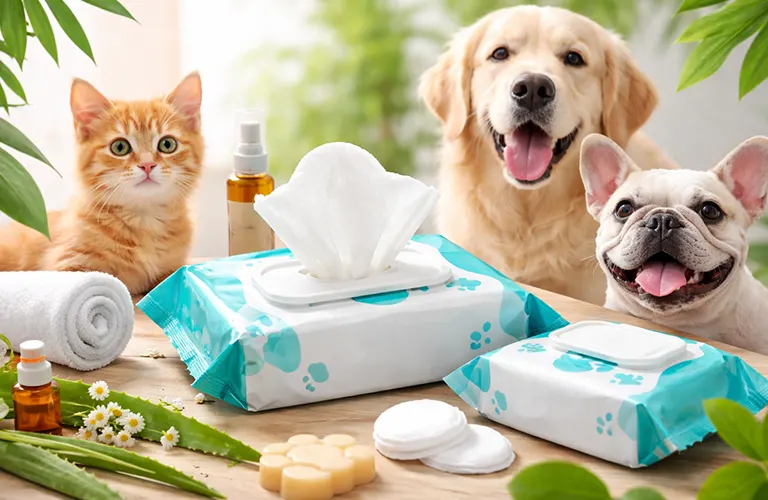
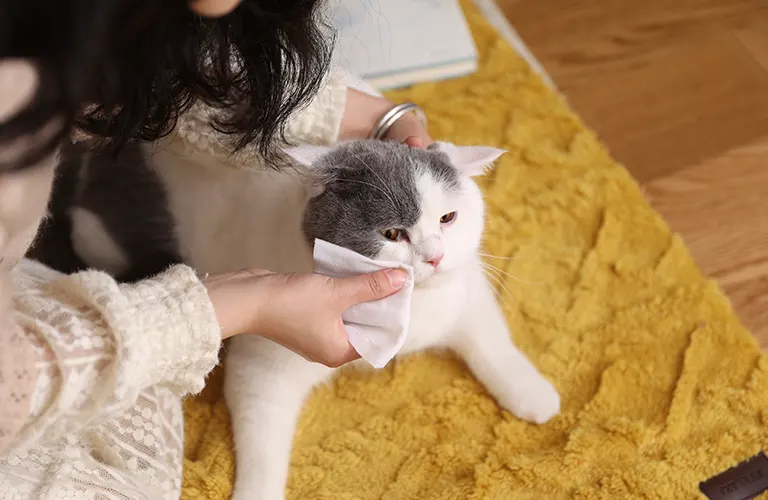
Pet wipes have rapidly evolved into a fundamental segment within the global pet hygiene and grooming industry. Designed for convenient cleaning of paws, coats, ears, and sensitive areas, pet wipes offer an efficient solution for maintaining cleanliness between baths. As modern pet ownership shifts toward higher hygiene standards and daily care routines, wipes have become a staple consumable rather than an occasional accessory product.
At the same time, global pet care spending continues to rise steadily. According to industry reports, worldwide pet care expenditure has surpassed hundreds of billions of USD annually, driven by increasing pet ownership, premiumization trends, and the growing emotional bond between pets and their owners. Hygiene and skin health are now central priorities, particularly in urban households where convenience and practicality influence purchasing decisions.
Within this broader expansion of the pet care market, the pet wipes category stands out for its strong repeat-purchase nature, product versatility, and continuous innovation in materials and formulations. As demand grows across mature markets and emerging regions alike, pet wipes are positioned as a high-potential segment shaping the future of global pet hygiene solutions.
Market Size & Growth Forecast
The global pet wipes market is experiencing steady and measurable growth, supported by multiple independent industry research institutions. Although figures vary depending on scope and methodology, all reports indicate a consistent upward trajectory.
According to Industry Research Estimates, the global pet wipes market was valued at approximately USD 1.95 billion in 2025, projected to reach USD 2.05 billion in 2026, and is expected to grow to around USD 3.25 billion by 2032, reflecting a compound annual growth rate (CAGR) of approximately 7.5% during the forecast period.
Research published by Future Market Report estimates the market at roughly USD 1.45 billion in 2024, with projections exceeding USD 3 billion by 2032, representing a stronger CAGR of approximately 8.7%.
Meanwhile, MetaTech Insights reports a more conservative estimate, valuing the market at approximately USD 712 million in 2024, with expected growth to about USD 1.42 billion by 2035, reflecting a CAGR of around 6.5% between 2025 and 2035.
Similarly, Business Research Insights projects the market to reach approximately USD 1.33 billion by 2035, growing at around 6.5% CAGR over the forecast period.
While absolute valuations differ, the consistent conclusion across all major research institutions is clear: the global pet wipes market is expanding at a mid- to high-single-digit CAGR, indicating stable and sustainable growth.
This expansion is supported by increasing pet ownership worldwide, growing awareness of pet hygiene and skin health, and rising demand for convenient, daily-use grooming solutions. In mature markets, premiumization and functional formulations (such as antibacterial, hypoallergenic, and biodegradable wipes) are accelerating value growth. In emerging markets, improving disposable income and expanding e-commerce infrastructure are further stimulating category penetration.
Overall, the pet wipes segment is transitioning from a supplementary product to a routine consumable within the global pet care industry, positioning it as a long-term growth category.
Key Global Growth Drivers
Rising Global Pet Ownership
The steady increase in global pet ownership remains the most fundamental driver of market growth. According to the American Pet Products Association (APPA), more than 65% of U.S. households own at least one pet, and similar upward trends are observed across Europe and parts of the Asia-Pacific. As the global pet population expands, routine hygiene products such as pet wipes naturally experience higher baseline demand. In densely populated urban areas, where pets live primarily indoors, convenient cleaning solutions become even more essential.
Pet Humanization and Premiumization
The ongoing pet humanization trend continues to reshape purchasing behavior. Pets are increasingly treated as family members, leading owners to prioritize health, comfort, and daily hygiene. This shift drives demand for higher-quality products, including hypoallergenic wipes, plant-based formulations, alcohol-free solutions, and dermatologically tested options. As consumers trade up from basic cleaning products to functional and premium variants, the category’s overall value grows steadily.
Growing Hygiene Awareness
Heightened awareness of hygiene and skin health has further accelerated market expansion. Pet owners are more conscious of bacteria, allergens, and environmental pollutants that pets may bring indoors after outdoor activities. At the same time, attention to coat condition and skin sensitivity has increased. Pet wipes provide a quick, water-free method to maintain cleanliness between baths, reinforcing their role as a daily-use consumable rather than an occasional purchase.
Convenience-driven Lifestyles
Modern lifestyles favor products that simplify routines and save time. Compared to traditional bathing, pet wipes offer speed, portability, and ease of use. They require no rinsing and can be used at home, during travel, or after walks. This practicality significantly increases usage frequency, particularly among urban households and working pet owners.
Expansion of E-commerce Channels
The rapid growth of e-commerce and omnichannel retail has expanded access to pet hygiene products worldwide. Online platforms allow brands to offer broader product ranges, subscription models, and specialized SKUs. In markets such as North America and Asia-Pacific, online pet care sales continue to outpace traditional retail growth, strengthening the visibility and penetration of pet wipes.
Sustainability and Clean-Label Demand
Sustainability has become an increasingly important purchasing factor, particularly in Europe and environmentally conscious markets. Consumers are showing stronger preference for biodegradable materials, plastic-reduced packaging, and clean-label formulations free from harsh chemicals. This shift is encouraging innovation in nonwoven materials and eco-friendly packaging solutions, further driving product differentiation and long-term market growth.
Market Segmentation & Opportunities
By Product Type
The pet wipes market can be segmented into several product categories, each addressing specific hygiene needs. General cleaning wipes remain the largest volume segment, driven by daily paw and coat cleaning routines. However, value growth is increasingly supported by functional products such as antibacterial and antifungal wipes, deodorizing wipes, paw care wipes, and skin & itch relief wipes.
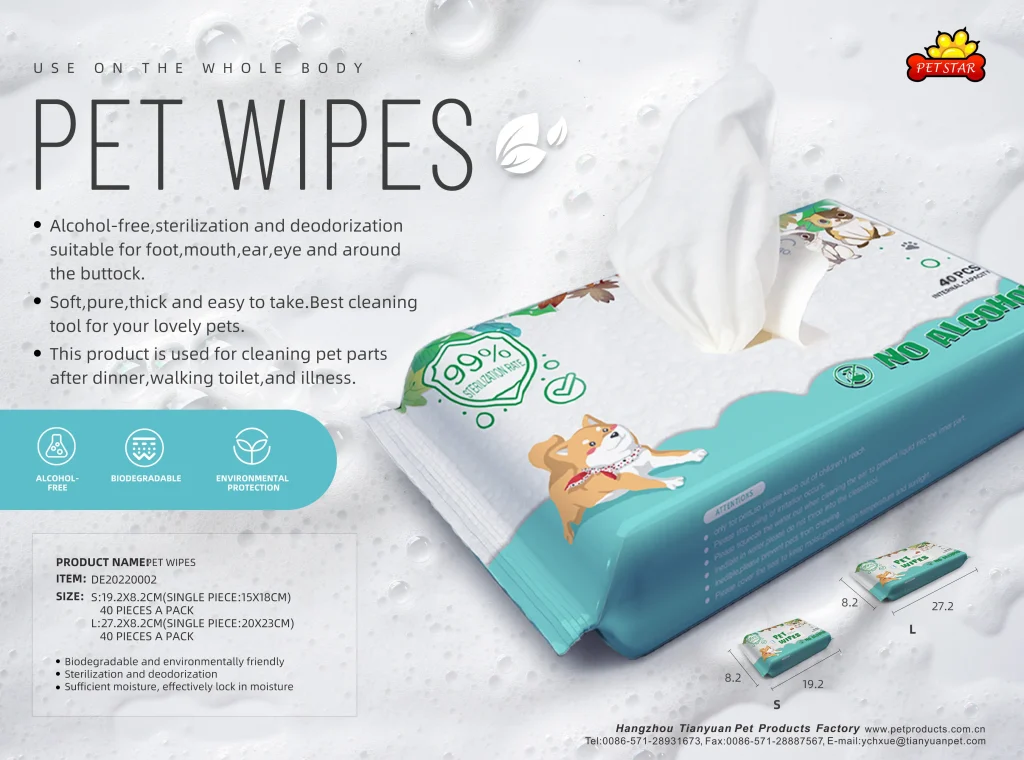
As pet owners become more attentive to dermatological health and odor management, specialized formulations are gaining higher price acceptance. This diversification creates opportunities for differentiated product lines and value-added SKUs rather than relying solely on standard cleaning wipes.
By Animal Type
From an animal-type perspective, dog wipes currently dominate global demand, reflecting the larger global dog population and higher outdoor activity frequency. Dogs typically require more frequent paw and coat cleaning, especially in urban environments.
However, cat wipes are also showing stable growth, particularly in indoor hygiene and sensitive-skin applications. As multi-pet households increase, brands are expanding dedicated product lines for both dogs and cats to capture broader market share.
By Distribution Channel
Retail channels such as supermarkets and pet specialty stores continue to represent a major share of sales, particularly in North America and Europe where organized retail infrastructure is mature.
At the same time, digital channels are expanding rapidly, with e-commerce enabling broader SKU visibility, subscription models, and direct-to-consumer strategies. Online platforms are especially influential in Asia-Pacific and North America, where pet care e-commerce penetration continues to rise.
Professional channels, including grooming salons and veterinary clinics, also contribute to steady demand, particularly for antibacterial and therapeutic wipe variants.
Clear segmentation analysis allows companies to tailor product portfolios, pricing strategies, and packaging formats to different market channels and consumer needs.
Regional Market Insights
North America
North America represents the largest share of global pet wipes consumption. High pet ownership rates, strong purchasing power, and well-developed retail networks support stable demand. The region also shows a pronounced premiumization trend, with growing preference for hypoallergenic, dermatologist-tested, and eco-conscious products.
Asia-Pacific
Asia-Pacific is one of the fastest-growing regions in the pet wipes market. Rising pet adoption rates, expanding middle-class populations, and rapid e-commerce development are accelerating market penetration. Countries such as China, Japan, and South Korea are witnessing increasing demand for convenient pet hygiene products, particularly in urban centers.
Europe
Europe demonstrates strong growth potential, driven by regulatory awareness and consumer preference for sustainable products. Demand for biodegradable materials, natural formulations, and environmentally friendly packaging is particularly prominent. Functional and eco-certified wipes are gaining higher acceptance across Western European markets.
Understanding regional demand patterns enables more accurate sourcing decisions, product positioning, and inventory allocation strategies.
Market Trends & Innovation
Eco-Friendly and Functional Innovation
Sustainability and product performance are central innovation themes in the pet wipes market. Biodegradable nonwoven materials, plant-based formulations, alcohol-free compositions, and hypoallergenic certifications are becoming key competitive differentiators. Brands that combine environmental responsibility with proven efficacy are better positioned to capture long-term growth.
Therapeutic and Specialty Wipes
As pet health awareness increases, demand for specialized solutions continues to grow. Antibacterial, antifungal, and tear-stain remover wipes are gaining traction, particularly among pets with sensitive skin conditions or dermatological concerns. These higher-value segments contribute significantly to overall market revenue growth.
Sustainable Packaging
Beyond formulation, packaging innovation is also evolving. Plastic-reduced lids, recyclable materials, and refill packaging concepts are increasingly adopted in premium markets. Clean-label positioning and transparent ingredient disclosure further strengthen brand trust and differentiation.
Competitive Landscape
The global pet wipes market consists of established international brands alongside numerous regional manufacturers. Competition is based not only on pricing but also on product differentiation, formulation quality, and brand positioning.
Key evaluation factors include product safety standards, material quality, dermatological certifications, and environmental compliance claims. Supply reliability and manufacturing scalability are also critical in ensuring consistent product availability. Additionally, strong private label development capabilities have become a major advantage as more retailers and distributors launch their own brands.
Understanding the competitive structure helps companies make informed procurement and partnership decisions.
Implications for B2B Buyers
Strategic Sourcing
Long-term growth in the pet wipes category requires sourcing partners capable of supporting innovation, consistent quality control, and compliance with international standards. Manufacturers with flexible production capabilities and material sourcing expertise are better positioned to support evolving market demands.
Product Portfolio Development
Aligning product portfolios with rising consumer preferences—such as natural ingredients, specialty functions, and eco-friendly materials—can enhance competitiveness. Expanding beyond basic cleaning wipes into functional segments may improve margins and brand positioning.
Supply Chain Planning
Given projected mid- to high-single-digit CAGR growth across regions, demand forecasting should incorporate regional expansion trends and channel shifts. Strategic inventory planning based on market growth projections can help ensure stable supply and minimize risk.
Overall, the global pet wipes market presents sustained expansion opportunities supported by structural growth drivers, evolving consumer expectations, and product innovation.
Conclusion
The global pet wipes market is experiencing steady and sustained growth, driven by rising pet ownership, increased hygiene awareness, convenience-focused lifestyles, and the ongoing humanization of pets. Regional trends and product innovations, such as eco-friendly materials, therapeutic formulations, and premium positioning, are further enhancing the market’s value and shaping future opportunities.
For B2B buyers and partners, understanding these trends is essential for strategic sourcing, product development, and supply chain planning. The segment’s repeat-purchase nature and versatility make it a core consumable within the broader pet care industry, offering opportunities for differentiation and long-term growth.
As a leading manufacturer in the pet hygiene sector, Petstar is well-positioned to support global partners with high-quality pet wipes, flexible private label solutions, and innovative product development. With strong supply capabilities, rigorous quality control, and the ability to customize formulations and packaging, Petstar enables distributors, importers, and brand owners to capitalize on the expanding pet wipes market while meeting evolving consumer preferences.