




Introduction
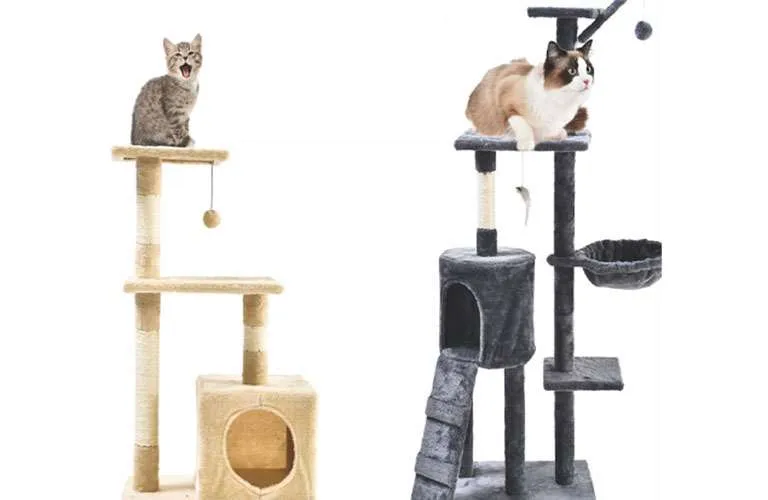
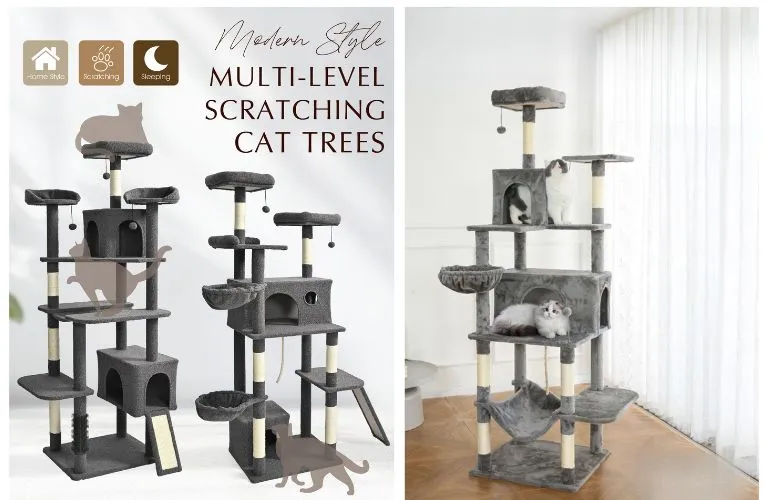
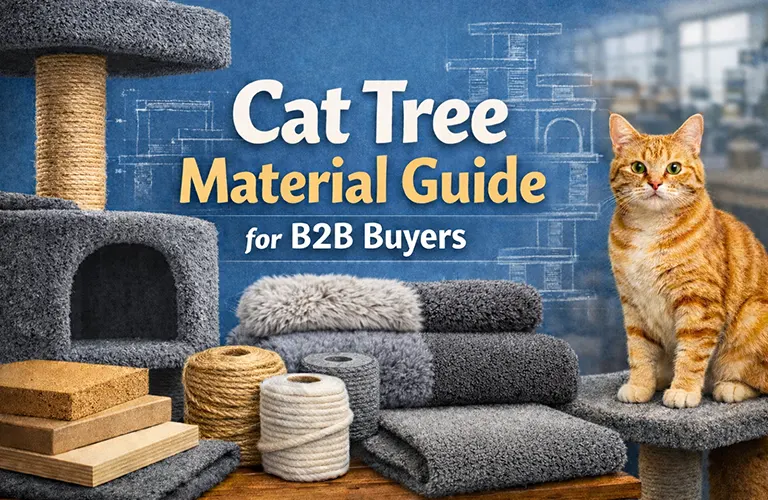
In the pet industry, one cat tree can look almost identical to another in a catalog. Grey plush, sisal rope, a similar layout, on screen, the differences are minimal. The real gap usually appears three months after delivery. That’s when budget materials start turning into 1-star reviews, unstable structures, and rising return rates. As a brand, you don’t feel the problem when the container leaves the port, you feel it when customers start complaining.
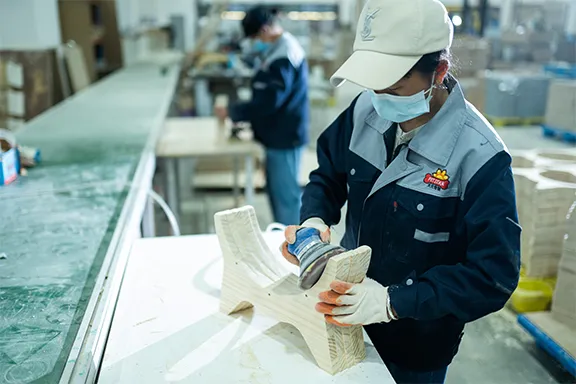
As a manufacturer, we think about this stage long before production begins. On the factory floor, we focus on details most consumers never see but always feel: boards that deform after long sea shipments, fabrics that shed or “bald” after weeks of use, and adhesives that leave an odor strong enough to keep cats away.
For B2B buyers, understanding cat tree materials isn’t about learning theory. It’s about controlling risk, protecting margins, and building products that perform after they reach real homes.
In this guide, we break down the core materials behind cat trees, from structure to surface, from a factory perspective, explaining where material choices truly matter and where smart compromises make sense.
Core Structure Materials
In cat tree manufacturing, nothing affects long-term performance more than the core structure. Boards determine stability, load-bearing capacity, and how well a product holds up after months of daily use.
For brands sourcing cat trees at scale, board selection directly impacts:
- Wobbling complaints
- Structural failures
- Return and replacement rates
Understanding board types helps buyers align cost, durability, and product positioning before problems show up in the market.
Particle Board
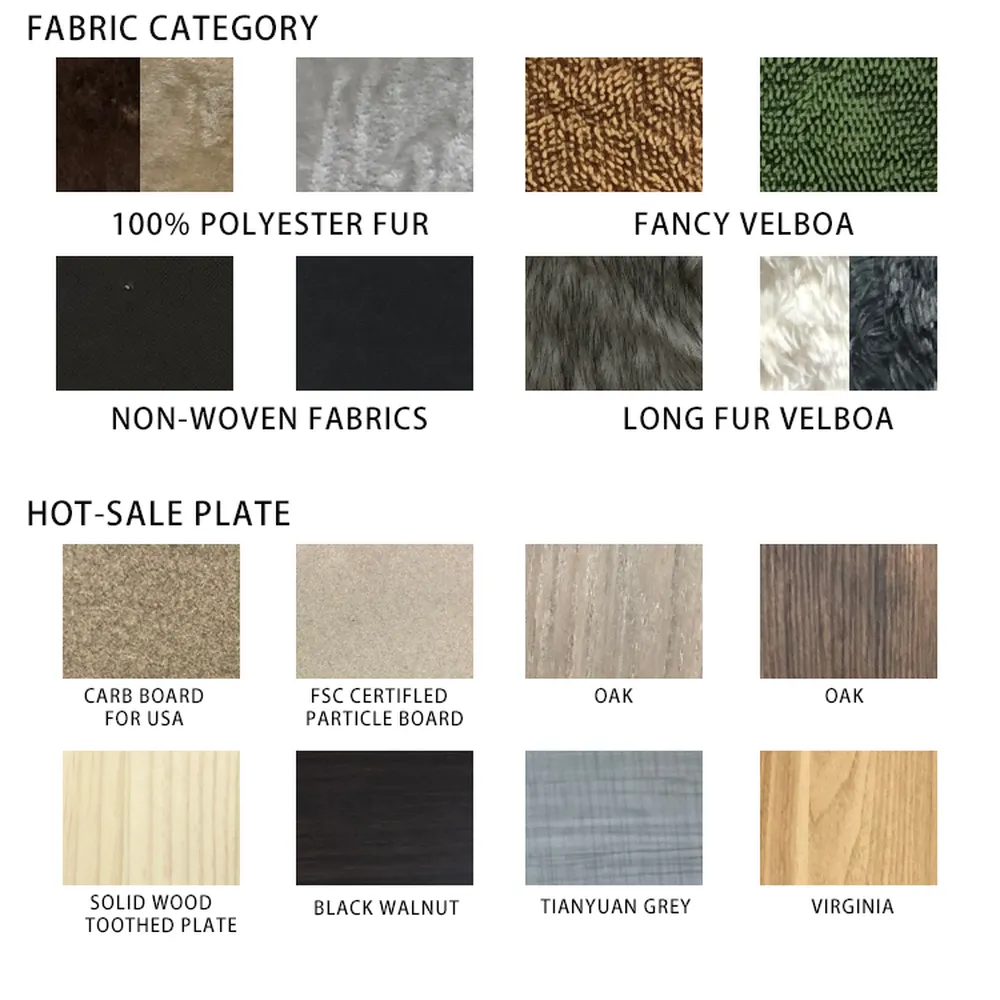
Particle board is the most commonly used board material in mass-produced cat trees. It’s made by compressing wood particles with resin, offering a cost-effective and consistent solution for large-scale production.
Why factories use particle board:
- Competitive pricing for high-volume programs
- Stable thickness and predictable performance
- Easy CNC processing for standardized designs
Typical applications:
- Entry-level and mid-range cat trees
- OEM and private label programs
- Standard household-use models
Factory insight:
In real production, particle board quality is not just about “PB or not.” Thickness and density matter far more. Common options include 12mm, 15mm, and 18mm.
For taller or multi-platform designs, increasing board thickness significantly improves stability and reduces wobbling, but it also increases material cost and shipping weight. At Petstar, board specs are always adjusted based on target market, price tier, and expected usage, not chosen blindly.
MDF
MDF is often used in mid- to high-end cat trees where surface quality and visual consistency matter more. Its finer internal structure allows for smoother edges and cleaner machining.
Why manufacturers choose MDF:
- Smooth surface for plush or faux fur wrapping
- Precise cuts and cleaner edges
- More consistent appearance across batches
Where MDF works best:
- Premium models
- Designs with visible edges or complex shapes
- Markets that prioritize appearance and finish
B2B reality check:
MDF increases both weight and cost. For this reason, many factories, including Petstar, use MDF selectively rather than throughout an entire structure, combining it with particleboard to balance aesthetics and efficiency.
Plywood
Plywood offers superior strength and screw-holding performance thanks to its layered construction. In cat tree manufacturing, it’s typically reserved for projects where durability is a key selling point.
Advantages:
- Excellent load-bearing capacity
- Strong resistance to cracking and deformation
- Ideal for tall, large, or multi-cat designs
Factory perspective:
Plywood is not common in mass-market production due to cost and processing complexity. It’s mainly used when buyers prioritize long-term durability over price sensitivity.
Post & Support Materials
In cat tree manufacturing, posts and supports are often where stability is won or lost. Even with high-quality boards, poorly designed or under-specified posts can cause wobbling, shorten product lifespan, and quickly lead to customer complaints. From a factory perspective, post materials deserve as much attention as platforms and bases.
Solid Wood Posts
Solid wood posts, typically made from pine or rubberwood, offer excellent load-bearing performance and strong screw-holding strength. In production, these posts perform reliably under frequent jumping and scratching, making them well suited for tall structures and multi-level cat trees. The trade-off is cost and weight. Solid wood increases raw material expense and shipping costs, which is why most factories reserve it for premium models or customized OEM programs rather than mass-market lines.
Paper Tube Posts
Paper tube posts are the most widely used support structure in large-scale cat tree production. They are made by winding multiple layers of kraft paper with adhesive, resulting in consistent dimensions and efficient assembly. From a manufacturing standpoint, performance depends heavily on wall thickness and glue quality. Thicker tubes resist compression better, while stable adhesives prevent deformation over time. In professional factories, these parameters are carefully controlled to ensure stability, especially in mid-height and multi-platform designs.
Composite Posts
Composite posts are designed to balance performance and cost. A common factory solution is reinforcing paper tube posts with internal wooden elements or additional layers. This approach improves stability without reaching the cost or weight of solid wood. Composite posts are frequently used in mid-range cat trees, allowing brands to offer taller designs while staying within competitive price ranges.
Covering & Surface Materials
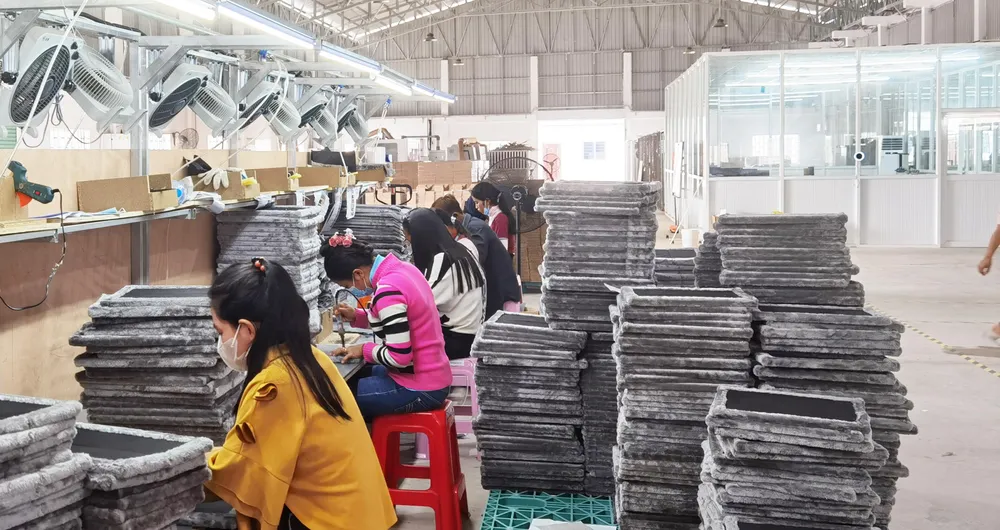
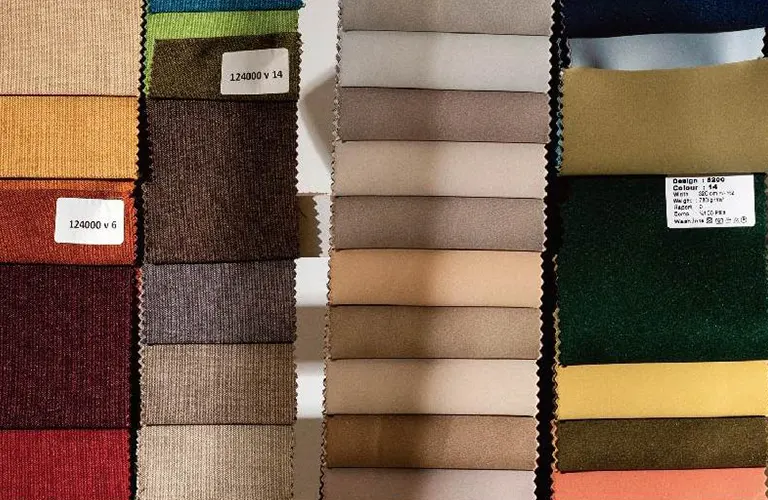
Surface materials are the first elements consumers notice, but in manufacturing, they affect far more than appearance. Fabric choice influences durability, defect rates, cleaning performance, and consistency across production batches. For B2B buyers, these factors directly impact perceived value and long-term customer satisfaction.
Plush and Faux Fur Fabrics
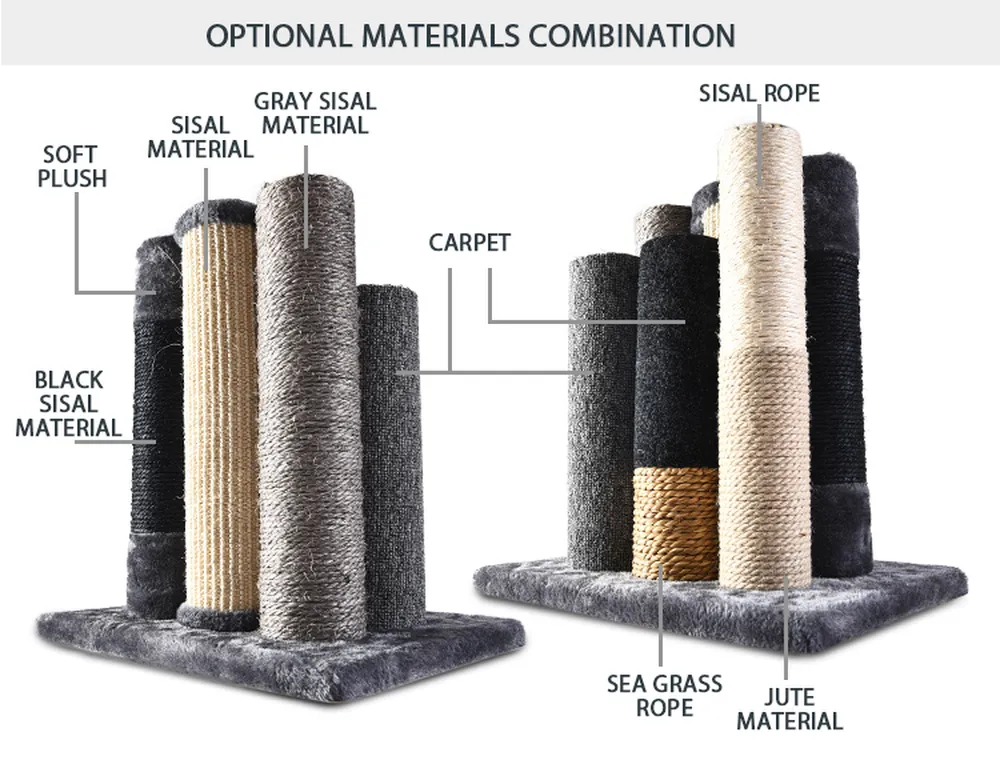
Plush and faux fur remain the most common surface materials in modern cat trees. They provide a soft touch and broad market appeal across regions. From a factory perspective, fabric density and fiber quality matter more than visual texture alone. Higher-density fabrics resist wear and maintain shape longer. Batch consistency is also critical for private label programs, as color deviation or uneven pile can easily lead to quality disputes if not tightly controlled.
Carpet Fabric
Carpet fabric is typically chosen for durability-focused designs. It offers higher abrasion resistance and withstands repeated scratching better than plush. In production, carpet-covered platforms are often used in functional areas rather than resting zones. While carpet lacks the softness and decorative look of plush, many factories combine both materials in a single design to balance durability and appearance.
Fabric Control in Production
In professional cat tree manufacturing, fabric selection goes beyond color and feel. Stretch behavior, backing strength, and cutting stability all affect assembly efficiency and final quality. Fabrics that stretch too easily can cause uneven wrapping, while weak backing increases the risk of tearing during production. Manufacturers with controlled sourcing and testing processes deliver more consistent results across repeat orders.
Scratching Materials
Scratching materials define how well a cat tree performs its core function over time. For B2B buyers, scratching durability has a direct impact on customer satisfaction, product lifespan, and replacement cycles.
Natural Sisal Rope
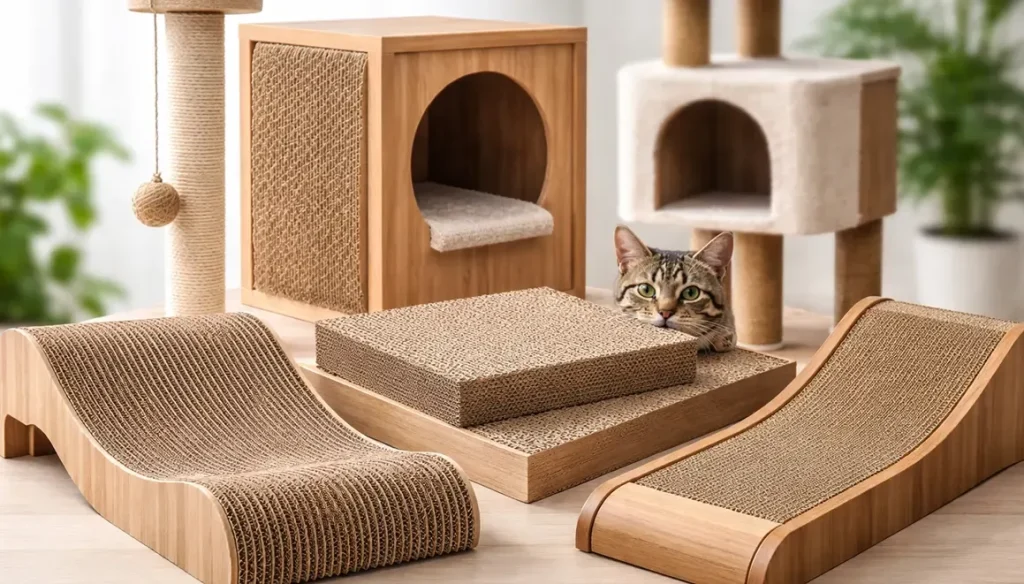
Natural sisal rope is the most widely used scratching material in cat tree manufacturing. Its plant-based fibers provide strong abrasion resistance and a texture that naturally attracts cats. From a factory standpoint, rope diameter, fiber tightness, and moisture control during storage all influence performance. Thicker, tightly twisted sisal ropes significantly improve wear resistance, especially on vertical posts that receive heavy use.
Cotton Rope
Cotton rope offers a softer scratching surface and more flexibility in decorative designs. It is easier to handle during production and allows smoother wrapping around posts. However, cotton wears faster than sisal, making it better suited for lighter-use areas or mid-range products rather than heavy-duty designs.
Winding and Fixation Quality
Regardless of material, winding quality plays a decisive role in long-term performance. Proper tension and secure adhesive application prevent ropes from loosening or shifting over time. In large-scale OEM production, controlled manual or semi-automated winding ensures consistency across batches and reduces after-sales complaints.
Adhesives & Fasteners
In cat tree manufacturing, adhesives and fasteners are often overlooked, but they play a critical role in structural integrity and long-term durability. The right glue and hardware ensure that posts, platforms, and coverings stay firmly attached, reducing wobbling and minimizing after-sales complaints.
Water-based and hot-melt adhesives are commonly used to bond boards and secure ropes. Quality adhesives prevent early detachment, control odors, and maintain safety standards for pets. Similarly, screws, bolts, and metal connectors are essential for stable assembly. Factories implement torque testing and consistent fastening procedures to guarantee that each unit meets performance standards.
For B2B buyers, understanding adhesive types and hardware quality is important when evaluating suppliers. Reliable factories control these hidden materials carefully, ensuring consistent assembly quality and reducing potential structural failures in both standard and premium cat tree models.
Material Choices vs Product Positioning
For B2B buyers, understanding how different materials influence product positioning is essential when sourcing cat trees. The same cat tree design can serve multiple market segments depending on core boards, posts, coverings, and scratching materials. Manufacturers often adjust materials to balance cost, durability, and aesthetics, aligning the final product with target price tiers.
Material Selection and Market Segments
|
Material Type |
Common Options |
Typical Market Segment |
Key Considerations for B2B Buyers |
|
Core Boards |
Particle Board, MDF, Plywood |
Entry-level → Premium |
Thickness, density, load-bearing capacity, cost |
|
Posts |
Sisal Rope, Cotton Rope, Solid Wood |
Entry-level → Premium |
Durability, aesthetic appeal, multi-cat suitability |
|
Surface Coverings |
Plush/Faux Fur, Carpet |
Mid-range → Premium |
Fabric density, batch consistency, tactile quality |
|
Scratching Materials |
Sisal Rope, Cotton Rope |
Mid-range → Premium |
Rope diameter, fiber tightness, longevity |
|
Adhesives & Fasteners |
Water-based glue, Hot-melt, Screws/Bolts |
All segments |
Structural integrity, odor control, assembly consistency |
Why Petstar is a Leading Cat Tree Manufacturer
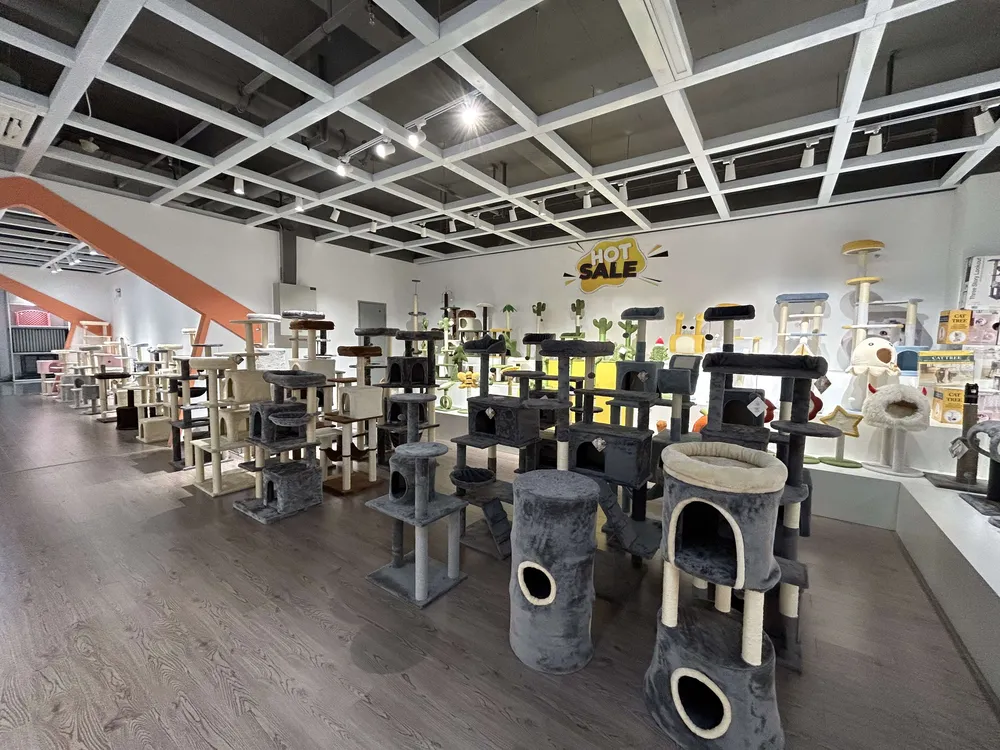
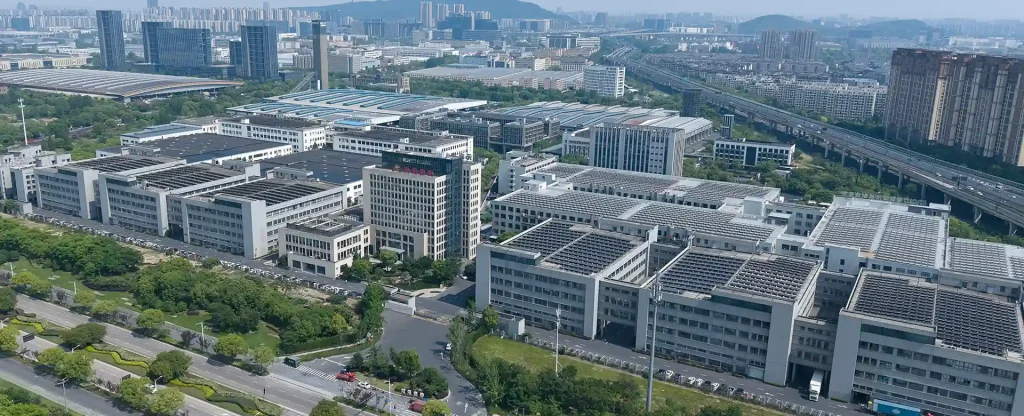
At Petstar, cat tree manufacturing is approached as a long-term partnership rather than one-off production. Our role as an OEM manufacturer is to help brands translate market expectations into practical material and structure decisions that work in real homes, not just on paper.
We support flexible material selection across different product tiers, from board thickness and post reinforcement to fabric density and scratching materials. This allows our partners to develop entry-level, mid-range, and premium lines within a single, controlled production system.
Quality control is integrated throughout the process. Structural components, rope winding, fabric application, and final assembly are all inspected to ensure stability and consistency. This reduces defect rates and helps our clients maintain predictable quality across repeat orders and large-scale programs.
With scalable production capacity and streamlined workflows, Petstar supports high-volume orders while maintaining stable standards. Our teams also work closely with buyers during development, offering practical input on material trade-offs, cost efficiency, and compliance requirements for different markets.
Conclusion
Cat tree materials determine how a product performs long after it leaves the warehouse. Boards affect stability, posts define structural strength, fabrics influence durability and appearance, and scratching materials decide how well the product meets a cat’s natural behavior.
For B2B buyers, understanding these material choices means fewer surprises after launch, lower return rates, and stronger long-term product performance. It also allows for clearer communication with manufacturers and better control over cost and quality.
Petstar combines manufacturing experience, flexible OEM capabilities, and structured quality control to deliver cat trees that are built for real-world use. For brands and large buyers seeking reliable supply and consistent performance, working with a manufacturer that understands materials at a practical level makes all the difference.