









Introduction
Cat scratching is a natural behavior that plays a critical role in maintaining a cat’s claw health, relieving stress, and supporting overall well-being. Indoor cats, in particular, rely on dedicated scratching surfaces to satisfy these instincts, which makes cat scratchers an essential item in every household with felines. This widespread behavior drives consistent demand for scratching products across global pet markets, creating a stable and profitable segment for pet brands and wholesalers.
For pet brands, importers, and major buyers, understanding how cat scratchers are made is key to making informed sourcing decisions. Knowing the materials, design structures, and production processes allows brands to evaluate quality, select products that align with their target markets, and develop effective private label or custom lines.
In this blog, we provide a detailed overview of how cat scratchers are manufactured, the types of materials commonly used, essential design considerations, and practical insights for B2B buyers looking to source high-quality, reliable products from professional manufacturers.
Why Cat Scratchers Are Essential in the Pet Product Market
Scratching is an instinctive behavior for cats. It is a vital part of their daily routine, helping them maintain healthy claws, stretch muscles, and mark their territory. For indoor cats, designated scratching surfaces are essential, as they provide a safe and satisfying outlet for these natural behaviors. Without proper scratching options, cats may turn to furniture, carpets, or curtains, which can lead to damaged household items. This intrinsic behavior is a key driver of demand for cat scratching products in the global pet market.
In addition to supporting claw health, cat scratchers serve as a practical solution for protecting furniture and home interiors. Homeowners increasingly seek products that allow their pets to engage in natural behaviors while keeping living spaces intact. For B2B buyers, this creates a clear value proposition: scratchers are not just pet accessories, they are solutions that meet both animal welfare and consumer convenience needs.
Cat scratchers also play an important role in enrichment and stress relief for indoor cats. Engaging with a scratcher provides mental stimulation and physical activity, reducing boredom and undesirable behaviors. This functional benefit enhances the appeal of scratchers in the eyes of consumers, increasing purchase frequency and brand loyalty, factors that are critical for wholesalers and private label brands aiming for repeat sales.
Finally, the market demand for cat scratchers in pet retail continues to grow. With rising cat ownership worldwide and the increasing focus on indoor pet care, scratchers have become a high-volume, high-turnover category. For major buyers and brands, understanding this demand and sourcing quality products from reliable manufacturers is essential to staying competitive in the pet product market.
Key Materials Used to Make a Cat Scratcher
The materials used in cat scratcher production play a critical role in determining durability, usability, and market appeal. Understanding these materials is essential for pet brands, importers, and major buyers when selecting products or developing private label lines.
Below is a structured overview of the most commonly used materials and their value in B2B sourcing:
| Material | Key Features | Typical Use | B2B Buyer Value |
|---|---|---|---|
| Corrugated Cardboard | Lightweight, recyclable, layered durability | Pads, lounges | Cost-effective, eco-friendly, versatile |
| Sisal Rope / Fabric | Natural fiber, strong claw resistance | Posts, cat trees | Premium feel, long-lasting, natural |
| Wood / MDF | Structural support | Furniture-style scratchers | Stability, supports heavier cats |
| Additional Materials | Catnip, printed surfaces, decorative fabrics | Custom or premium scratchers | Differentiation, branding opportunities |
Corrugated Cardboard
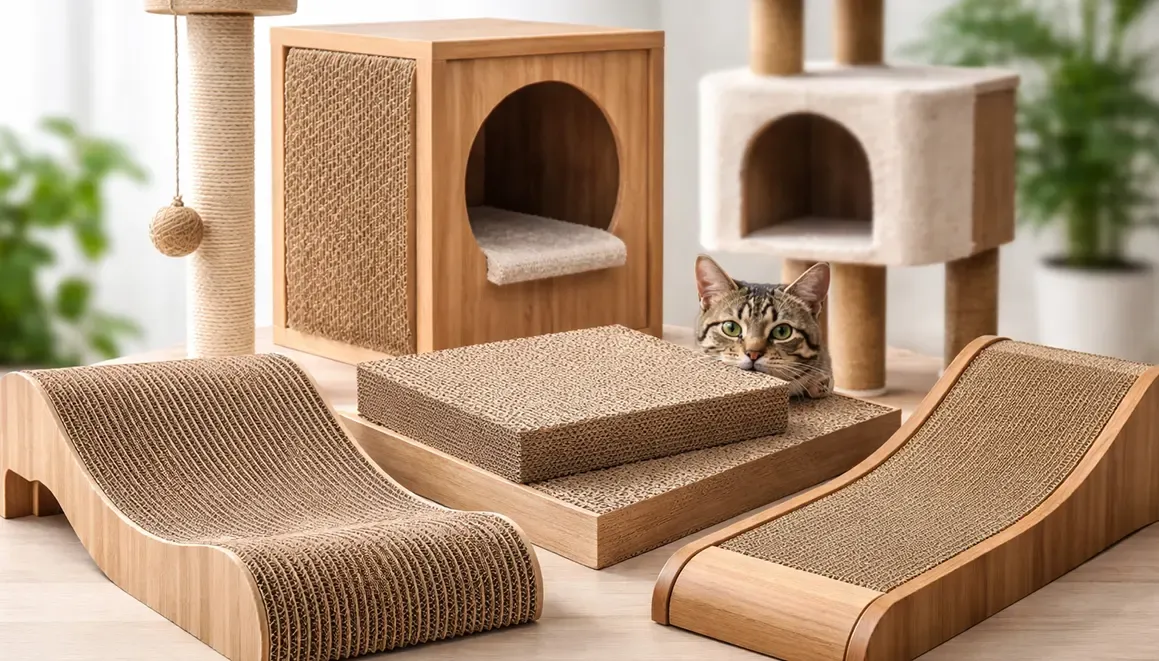
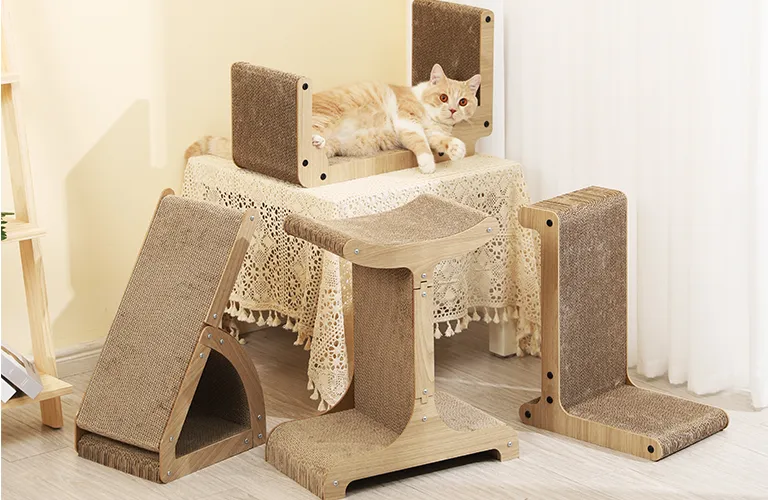
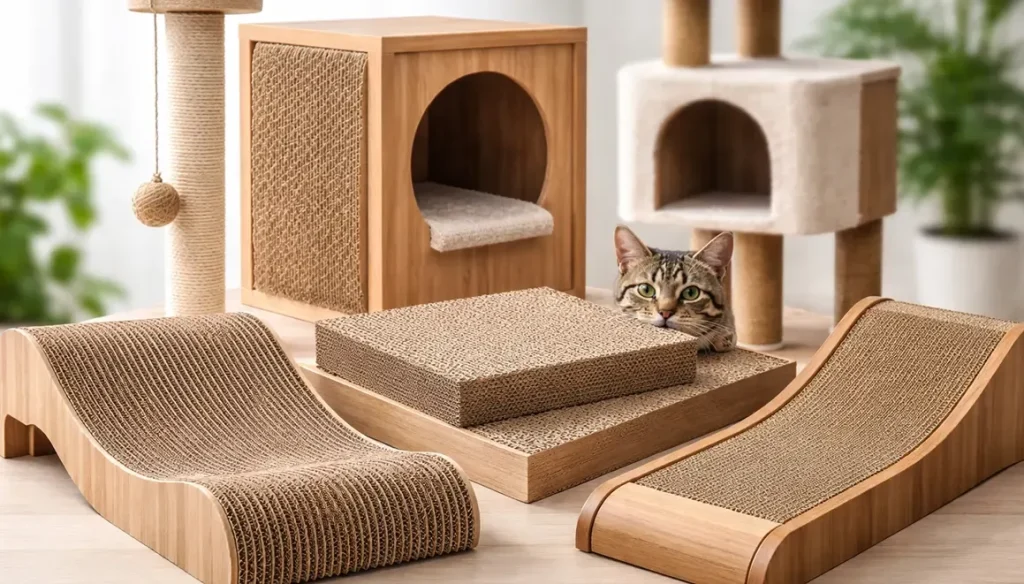
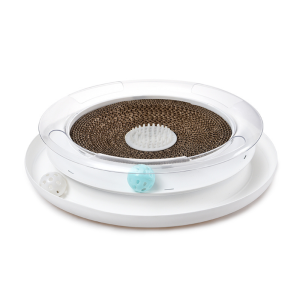
Corrugated cardboard is the most widely used material for cat scratchers. Its layered structure provides both durability and an ideal texture for cats to scratch, while remaining lightweight and cost-effective for bulk manufacturing. In addition, cardboard is eco-friendly and fully recyclable, making it attractive to environmentally conscious consumers. Cardboard scratchers can be produced in a variety of shapes, including flat pads, wave-style lounges, and multi-functional scratcher beds, offering flexibility for brands targeting different markets.
Sisal Rope or Sisal Fabric
Sisal is a natural fiber with excellent resistance to scratching. It is often used to wrap posts or cover parts of cat trees and furniture-style scratchers. Sisal provides a long-lasting surface for claws, ensuring the product maintains its functionality over time. Additionally, sisal appeals to buyers seeking premium or eco-conscious products, as it is both durable and derived from natural sources.
Wood or MDF Structure
For larger or furniture-style scratchers, wood or medium-density fiberboard (MDF) is commonly used to provide structural support. These materials ensure stability and longevity, particularly for multi-functional products such as lounge scratchers or cat furniture that combine scratching, resting, and playing functions. Using wood or MDF allows manufacturers to create scratchers that can support heavier cats while maintaining a polished, high-quality appearance suitable for retail markets.
Additional Materials
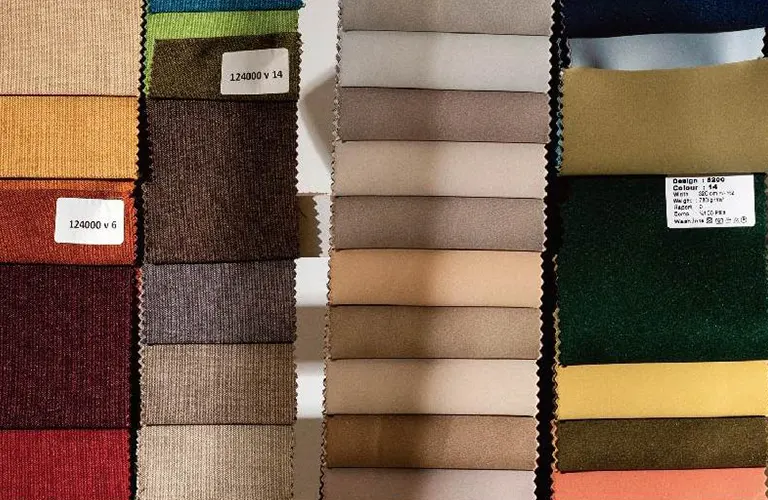
Manufacturers often incorporate additional materials to enhance product appeal and functionality. Catnip infusion can make scratchers more engaging for cats, increasing consumer satisfaction and repeat purchases. Industrial-grade paper glue is used to securely bond layers of cardboard or other materials, ensuring durability. Decorative fabrics or printed cardboard surfaces allow for custom branding and aesthetic differentiation, giving private label or OEM clients the opportunity to offer products that stand out on store shelves.
Typical Structure of a Cardboard Cat Scratcher
The design and structure of a cat scratcher play a key role in its usability, durability, and appeal to both cats and consumers. Most cardboard cat scratchers follow a consistent structural approach that ensures stability while providing an engaging surface for scratching.
Corrugated Core Layers
At the heart of every cardboard scratcher are layers of corrugated cardboard. These layers form the main scratching surface, offering the right texture for cats’ claws. High-density cores increase durability and allow the scratcher to withstand frequent use, which is particularly important for households with multiple cats or for products intended for retail distribution.
Compressed Structure
To enhance strength and longevity, the layered cardboard is subjected to industrial compression. This process consolidates the layers into a dense, sturdy block, ensuring the scratcher retains its shape even under heavy or repeated use. Compressed structures also help maintain a consistent product quality across large production runs, which is a critical consideration for B2B buyers sourcing at scale.
Protective Outer Frame
Many scratchers feature a protective outer frame made from additional cardboard, MDF, or printed materials. The frame reinforces edges, prevents premature wear, and provides a platform for branding or decorative finishes. For private label or retail-ready products, this outer frame enhances shelf appeal and supports a polished, premium look.
Anti-slip Base
A stable base is essential to prevent movement during use. Anti-slip materials or pads at the bottom improve safety and user satisfaction, reducing the risk of sliding or tipping. This feature is especially valued by wholesalers and brands targeting consumers who prioritize both functionality and quality.
Step-by-Step Process: How a Cardboard Cat Scratcher Is Made
Understanding the manufacturing process of cardboard cat scratchers is essential for pet brands and B2B buyers to evaluate product quality and reliability. While designs may vary, most cardboard scratchers follow a consistent production flow that ensures durability, safety, and repeatable results.
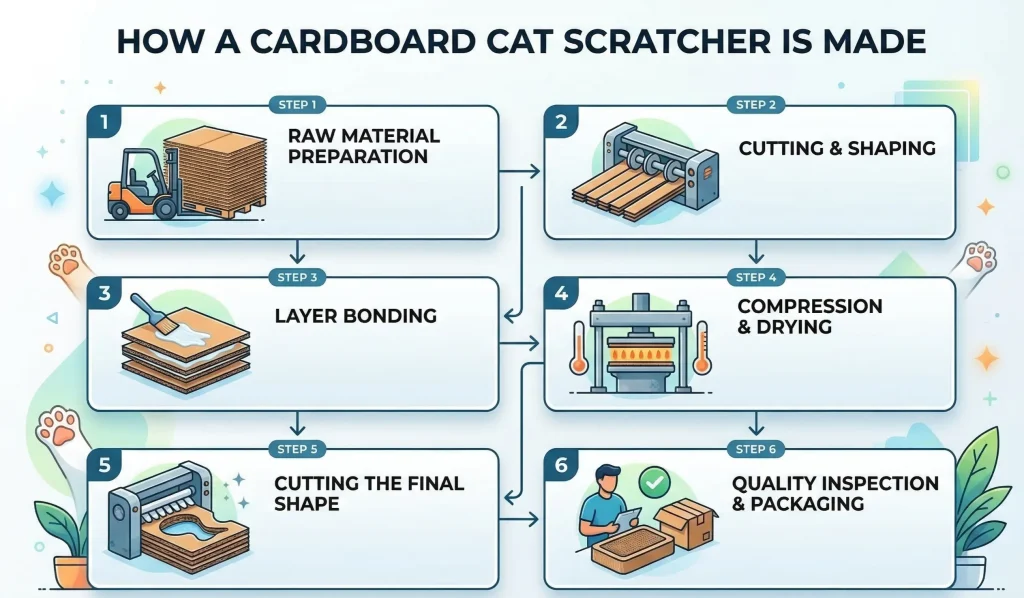
Step 1: Raw Material Preparation
The production process begins with preparing high-quality corrugated cardboard sheets. These sheets are carefully inspected for thickness, density, and structural integrity. At the same time, adhesives, structural boards, and any additional materials, such as sisal, decorative fabrics, or catnip, are prepared to ensure a smooth assembly process. Proper material selection at this stage is crucial for producing durable, long-lasting scratchers.
Step 2: Cutting and Shaping
Once the materials are ready, cardboard sheets are cut into strips of specific width and length according to the intended design. Automated machinery ensures precise, consistent cutting for high-volume production. This step allows manufacturers to create uniform components that fit together accurately in the next stages.
Step 3: Layer Bonding
The cut cardboard strips are then stacked and glued using industrial-strength adhesives. Layers are pressed together to form dense blocks, providing the scratcher with both the ideal texture for cats and long-term durability. High-pressure forming during this stage ensures the product maintains its shape even under frequent use.
Step 4: Compression and Drying
After bonding, the scratchers undergo industrial compression and drying processes. Compression strengthens the structure, while drying ensures that adhesives cure completely and that the scratcher retains stability. This step is essential for maintaining structural integrity during shipping and everyday use.
Step 5: Cutting the Final Shape
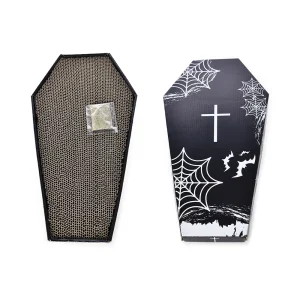
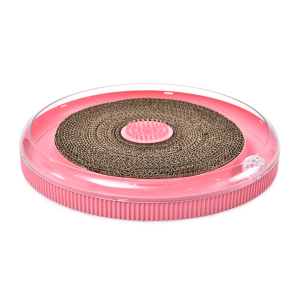
Once compressed and dried, the blocks are cut into their final shapes using CNC or die-cutting machines. Popular designs include wave-style scratchers, round pads, sofa-shaped scratchers, or multi-functional lounge beds. Precision cutting ensures consistency across batches, which is critical for wholesale or private label orders
Step 6: Quality Inspection and Packaging
The final stage involves thorough quality checks. Inspectors verify edge smoothness, structural strength, and overall appearance. Once products pass inspection, they are carefully packaged, ready for wholesale distribution or branded private label packaging. At this stage, manufacturers can also add logos, branding, or retail-ready displays to meet client specifications.
Petstar Popular Cat Scratcher Designs
At Petstar, we offer a range of cat scratcher designs tailored to different retail strategies, consumer preferences, and price points. Understanding the strengths of each style helps brands and buyers select the right product mix and position their cat scratching range effectively in the market.
Wave Cat Scratcher
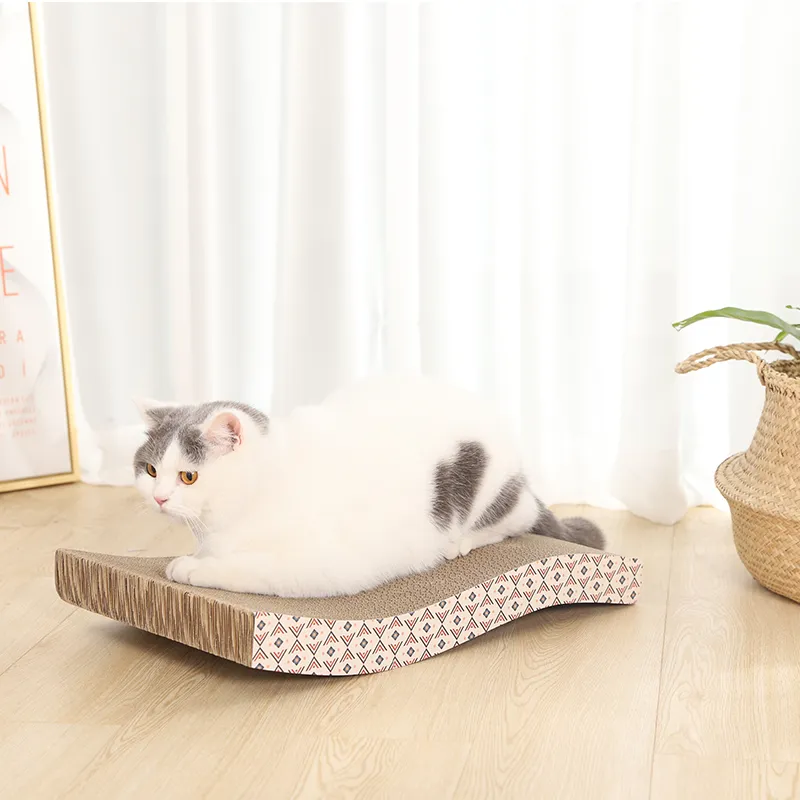
Petstar’s wave-style cat scratcher is one of our best‑selling designs for a reason. Its ergonomic curved shape encourages cats to stretch and engage at multiple angles, providing both scratching satisfaction and a comfortable resting spot. The design is lightweight, cost‑efficient to manufacture, and easy to display on retail shelves. Because of this versatility, wave scratchers are ideal for mass retail, pet specialty stores, and subscription box assortments.
Lounge Cat Scratcher
The lounge cat scratcher blends scratching function with a casual resting platform. Its gentle incline makes it appealing to cats who like to lie down while they scratch, which increases usage time and perceived value. For brands targeting urban pet owners who prioritize multifunctionality, this design offers a higher perceived value and supports premium pricing
Cat Scratcher House
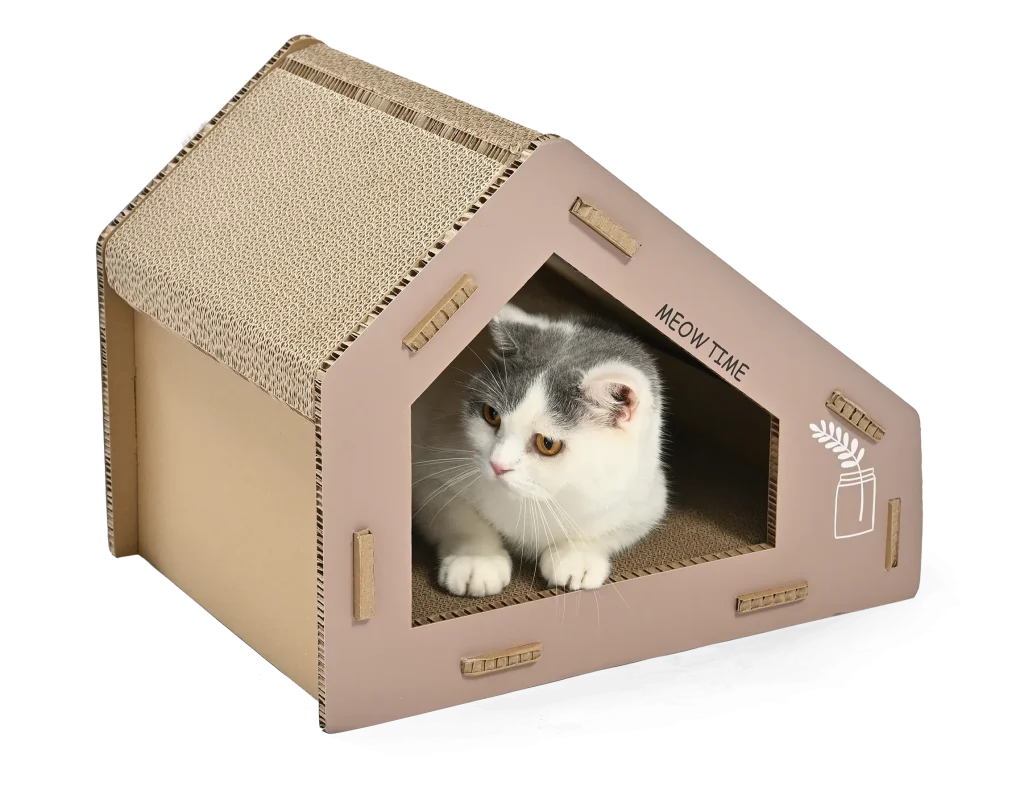
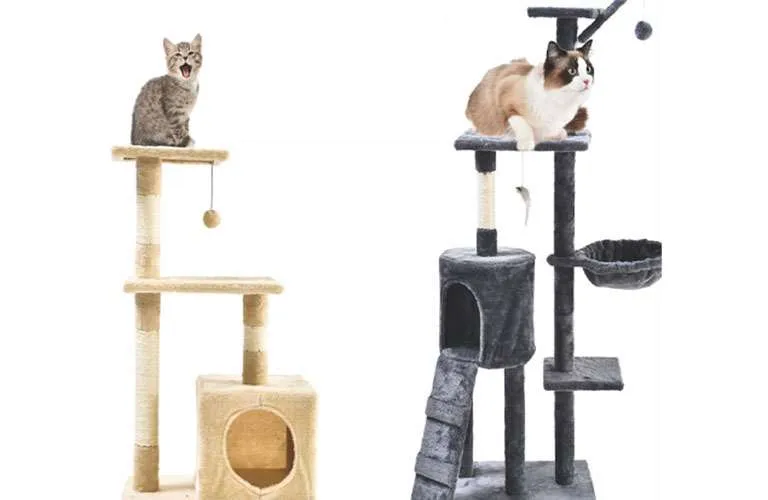
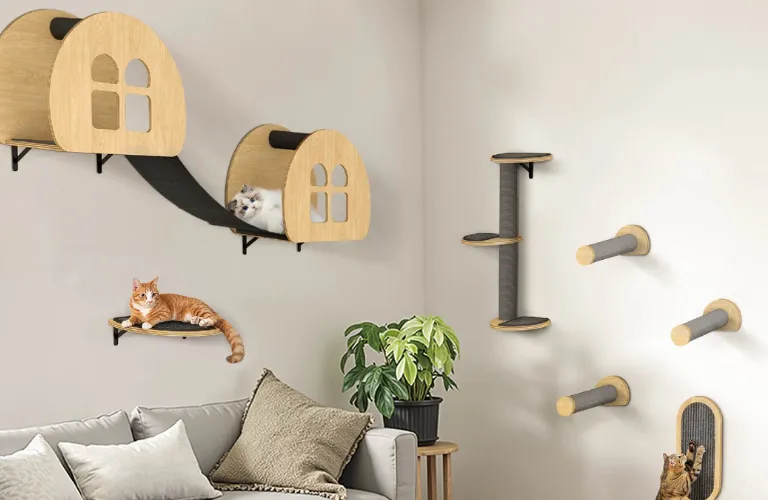
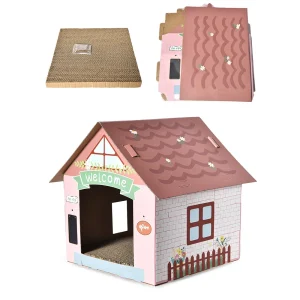
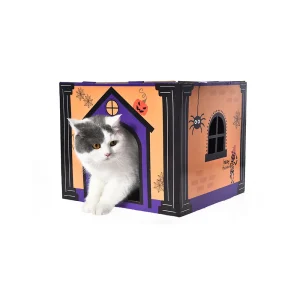
For consumers seeking both stimulation and enrichment, Petstar’s cat scratcher house is a standout choice. With built‑in hideaway space and scratching surfaces on all sides, this design meets multiple behavioral needs. It performs well in retail environments focused on interactive and enrichment products. Because of its multifunctional nature, this design often yields higher average order value for B2B buyers.
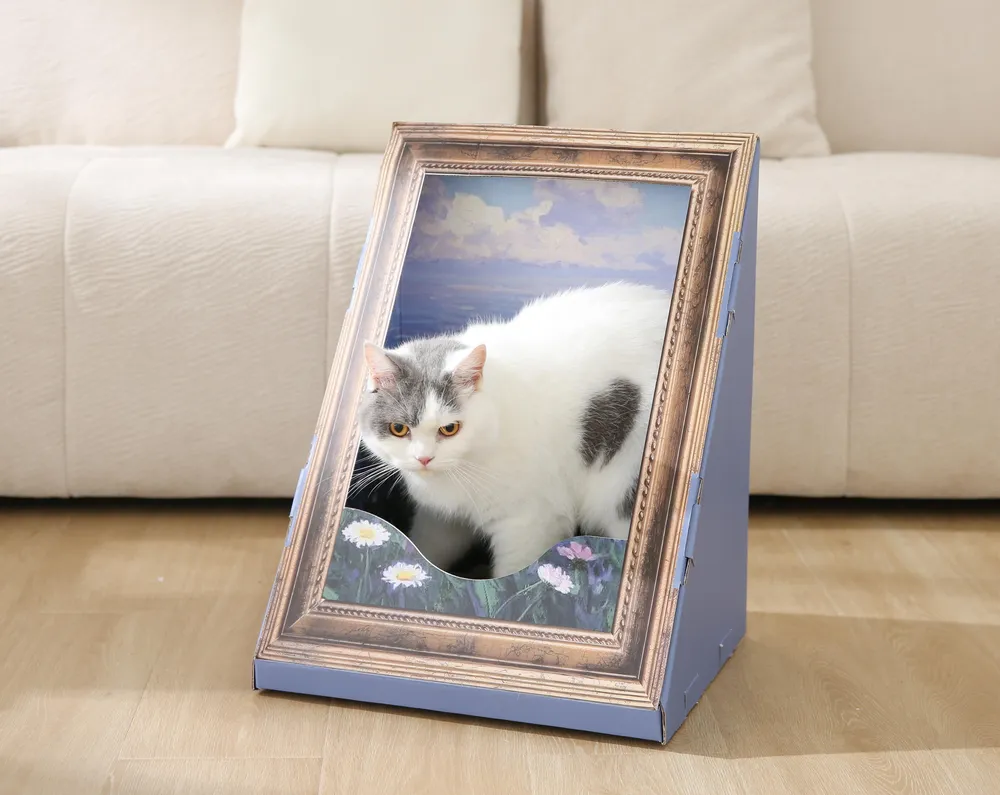
Multi‑functional Scratcher Bed
Our multi‑functional scratcher bed combines scratching surfaces with a soft resting area, creating an all‑in‑one solution for cats. This design resonates particularly well in markets where pet owners view scratchers not just as accessories, but as essential living items. Petstar offers customization options for this style, including printed covers, removable cushions, and brand labeling, enabling brands to differentiate their product offerings.
Corrugated Pad Scratchers
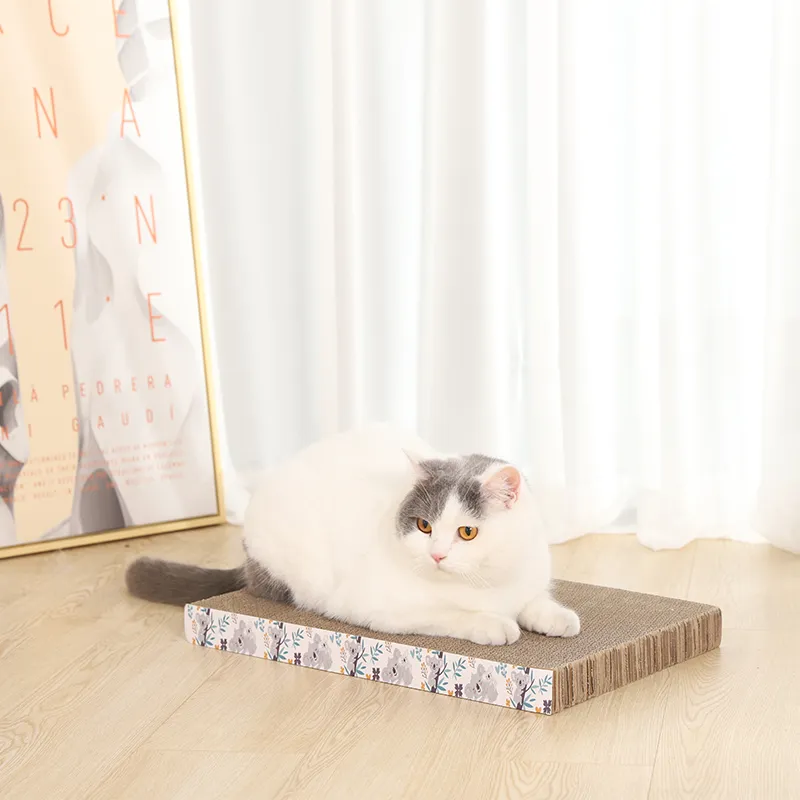
Simple yet effective, corrugated pad scratchers remain a staple in many cat product lines. They are cost‑efficient, lightweight, and perfect for bulk and value‑focused assortments. Petstar produces these pads in various thicknesses and densities to meet different retailer requirements and consumer expectations.
Petstar Custom Cat Scratcher Options
Customization is key to creating unique products that stand out in competitive markets. Petstar offers extensive custom options for cat scratchers, allowing B2B clients to tailor both functionality and design to their target audience.
Custom Sizes and Shapes
Petstar can produce scratchers in a wide range of sizes and shapes, from small tabletop pads to large lounge or multi-functional beds. This flexibility allows brands to address different consumer needs, such as multi-cat households, space-conscious apartments, or premium furniture-style scratchers.
Branding and Logo Printing
Private label and OEM clients can add brand logos or custom graphics directly onto the scratcher surface or outer packaging. Custom branding enhances shelf presence, reinforces brand identity, and increases perceived product value in retail environments.
Packaging Customization
Packaging is a crucial aspect of product presentation. Petstar offers retail-ready packaging, eco-friendly boxes, or display-ready designs, enabling buyers to align products with market trends and sustainability standards. Custom packaging options also support bulk distribution or seasonal promotions.
Material and Feature Customization
B2B clients can request specific materials or features, including:
- High-density corrugated cardboard for extra durability
- Sisal rope or fabric for posts and interactive sections
- Catnip infusion to increase engagement
- Printed or decorative surfaces to enhance aesthetics
These options allow brands to differentiate their offerings while maintaining consistent product quality.
Multi-functional Designs
Petstar also supports multi-functional scratcher beds that combine scratching surfaces with resting areas or small hideaways. Clients can customize color schemes, cushion materials, and printed patterns to create premium products suitable for urban or high-end markets.
Why Partner with an Experienced Manufacturer Like Petstar
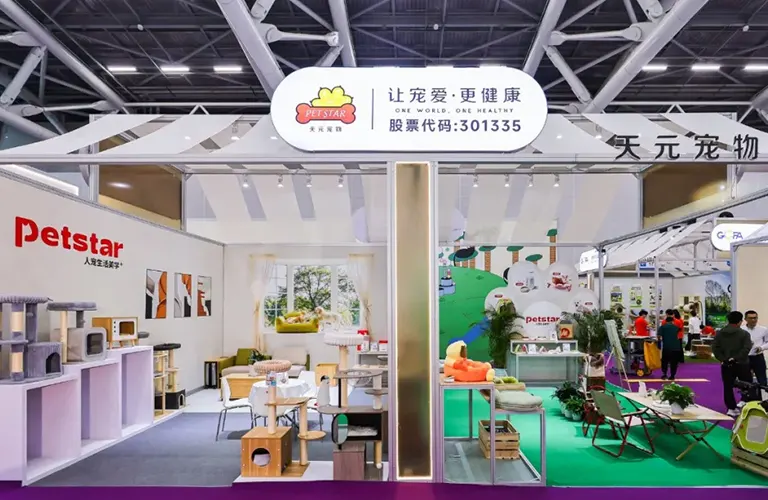
Partnering with an experienced manufacturer is a crucial factor in ensuring consistent product quality, scalability, and market competitiveness. Petstar, as a professional pet product manufacturer, has decades of experience producing high-quality cat scratchers and other pet essentials for global markets.
Reliable Production and Supply
Petstar maintains advanced production lines and efficient workflows, capable of handling bulk orders and seasonal demand with ease. This ensures timely delivery and consistent availability, which is vital for retailers and importers managing inventory and product launches.
Customization and Private Label Services
With Petstar, B2B clients can access a full range of OEM and private label services. From custom sizes, shapes, and materials to branded packaging and multi-functional designs, Petstar helps brands create unique scratchers that stand out in competitive markets.
Quality Assurance and Material Expertise
Petstar applies strict quality control across all production stages. Using high-density corrugated cardboard, sisal fibers, and reinforced structural materials, Petstar guarantees scratchers that are durable, safe, and reliable. This consistency reduces returns, strengthens brand reputation, and supports long-term customer satisfaction.
Market Insight and Product Innovation
Beyond manufacturing, Petstar’s experience in the global pet industry allows it to advise clients on design trends, consumer preferences, and retail-ready solutions. Brands benefit not only from high-quality products but also from insights that enhance market positioning and product appeal.
Conclusion
Cat scratchers are an essential product in the pet industry, combining functionality for cats with strong consumer demand. Understanding the materials, structural design, production process, and quality considerations is key to sourcing reliable, market-ready products.
Partnering with an experienced manufacturer like Petstar ensures access to durable, customizable, and retail-ready scratchers, backed by professional quality control, advanced production capabilities, and industry expertise. Whether selecting standard designs or developing private label lines, Petstar provides B2B clients with the flexibility and reliability needed to succeed in a competitive pet products market.
By leveraging Petstar’s knowledge and manufacturing capabilities, buyers can confidently offer cat scratchers that meet both consumer expectations and retail standards, supporting growth and long-term brand success.
FAQ: Cat Scratchers for B2B Buyers
1.What materials are commonly used in cat scratchers?
Cat scratchers are typically made from corrugated cardboard, sisal rope or fabric, and wood or MDF for structural support. Additional materials such as catnip, printed surfaces, and decorative fabrics can be added to enhance product appeal and functionality.
2.Can cat scratchers be customized for private label or OEM projects?
Yes, professional manufacturers like Petstar offer full OEM and private label customization, including size, shape, materials, logo printing, and retail packaging to meet different market needs.
3.What are the most popular cat scratcher designs?
Popular designs include wave scratchers, flat pads, lounge-style scratchers, scratcher houses, and multi-functional scratcher beds, each targeting different consumer needs and price segments.
4.How can B2B buyers evaluate the quality of a cat scratcher?
Buyers should evaluate cardboard density, bonding strength, structural stability, edge finishing, and anti-slip features. Consistent quality across production batches is also essential for wholesale distribution.
5.Why is corrugated cardboard widely used in cat scratchers?
Corrugated cardboard is cost-effective, lightweight, and recyclable. Its layered structure provides an ideal texture for scratching while supporting scalable manufacturing for bulk orders.
6.What should buyers consider when sourcing cat scratchers in bulk?
Buyers should consider material quality, durability, design variety, customization capabilities, pricing, packaging options, and the manufacturer’s production capacity and quality control systems.
7.How does customization help pet brands succeed in the market?
Customization allows brands to create unique products through design, color, and packaging, improving brand recognition, enhancing retail appeal, and supporting premium positioning.







































2 Responses
Greetings, I work with large scale retail and I am rescearching for partners who could help me on expanding and developing this market. I really enjoyed the products Pet Star products and I wanted to get information as to if your company has any interest in developing the brazilian market. I await for a response, and thank you for your attention.
Thank you, our sales representative will contact you via email, please check it.